Step-By-Step Guide To Choosing A Pool Heater Near Me
Choosing the right
pool heater comes down to five things: your pool size, the type of heater that suits your setup, running costs, budget, and whether you can get proper local installation and support. Get those right and you'll have a pool that's warm when you want it, without blowing the budget or ending up with the wrong system for your home.
Why Choosing The Right Pool Heater Matters
Knowing how to choose a pool heater comes down to five things: your pool size, the type of heater that suits your setup, running costs, budget, and whether you can get proper local installation and support. Get those right and you'll have a pool that's warm when you want it, without blowing the budget or ending up with the wrong system for your home.
A pool heater isn't just a nice extra, it's what turns your pool from a three-month-a-year novelty into something you actually use most of the year. But not every heater suits every pool, and picking the wrong one can mean high running costs, slow heating, or a system that just doesn't hold up to your climate.
On the Sunshine Coast and through regional Australia, conditions vary a fair bit from suburb to suburb. Some homes get plenty of consistent sun, others sit in shadier or cooler pockets, and that matters when you're deciding between gas, electric, and solar options. Getting this decision right upfront saves you from a costly switch down the track.
Step 1: Consider Your Pool Size And Usage
Pool heater sizing starts with two questions: how big is your pool, and how do you actually use it? A heater that's undersized for your pool volume will struggle to maintain temperature, especially overnight or during cooler months, while an oversized system means you're paying for capacity you don't need.
Usage matters just as much as size. A family that swims most days year-round has very different heating needs to a household that just wants the pool comfortable for weekend use over summer. If you're often topping up the pool with a spa or want faster heat-up times for occasional use, that changes which heater type makes the most sense too.
It's worth measuring your pool's volume and thinking honestly about how often you'll use it before locking in a heater size, since this decision shapes everything that follows.
Step 2: Compare Gas, Electric, And Solar Heaters
Gas vs electric vs solar pool heaters each come with their own strengths, and there's no single "best" option, it really depends on your situation.
Gas pool heaters heat water fast and work well regardless of weather, which makes them a solid choice if you want reliable heat on demand, particularly for occasional or last-minute pool use. The trade-off is generally higher running costs compared to other options.
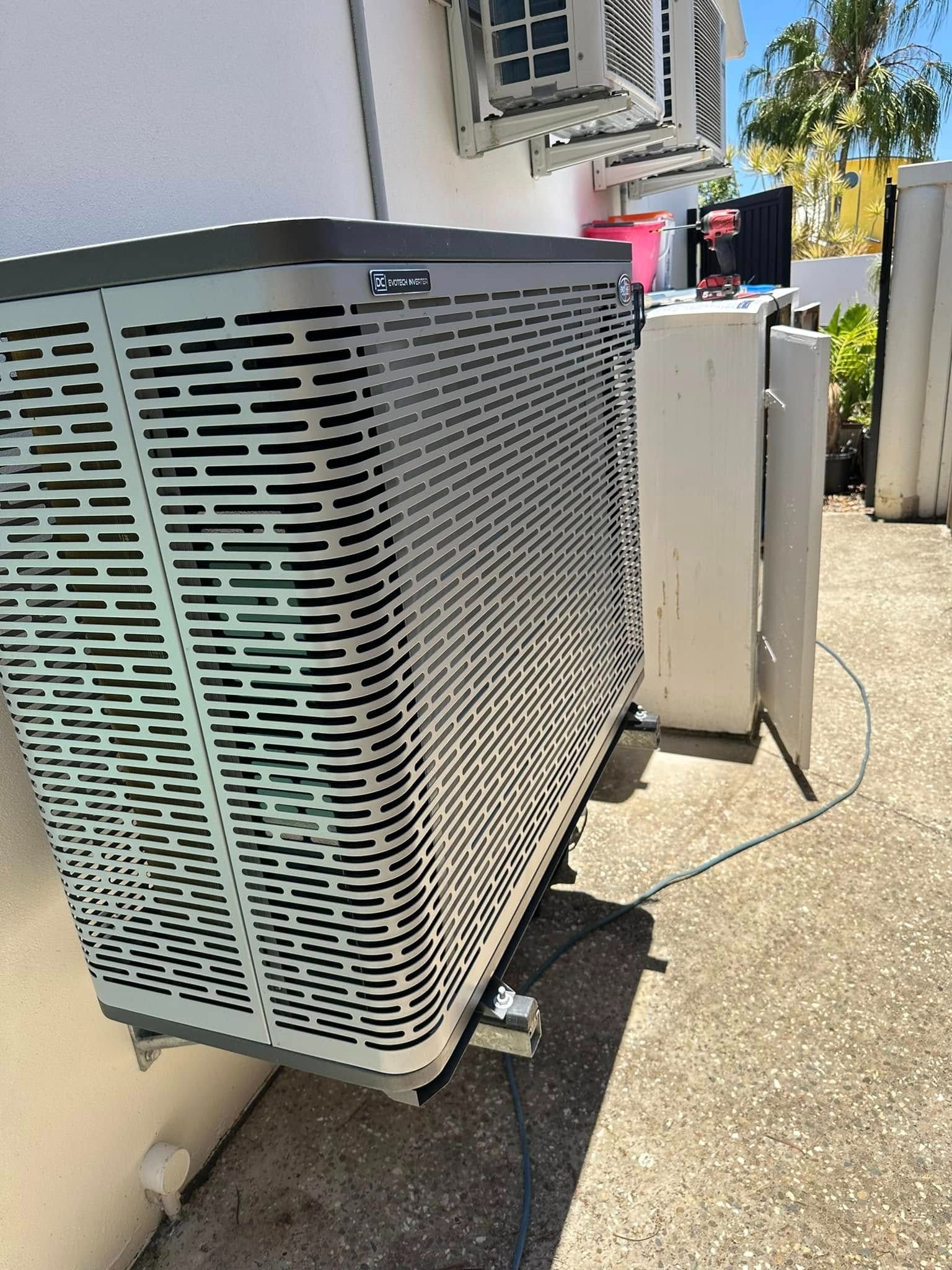
Electric heat pump systems are known for being more energy-efficient over time, since they draw heat from the surrounding air rather than generating it directly. They tend to work best when run consistently rather than switched on and off, and perform a little differently depending on the ambient air temperature.
Solar pool heaters use the sun to warm your water, which can mean very low running costs once installed. They're a great fit for sunnier properties with good roof or panel positioning, but they're more weather-dependent, so they typically work best alongside a backup heating option for cooler or overcast stretches.
Step 3: Weigh Up Energy-Efficiency And Running Costs
Energy-efficient pool heating isn't just about the upfront price of the unit, it's about what you'll be paying to run it over months and years. Gas heaters usually cost more to run day-to-day but heat quickly, which suits occasional use. Electric heat pumps often cost less to run long-term but perform best with steady, consistent use rather than being switched on and off. Solar systems can be the cheapest to run once installed, but their performance shifts with the weather and time of year.
Think about how you'll actually use the pool, because a heater that's efficient for one household's habits might not be the most cost-effective option for another. As an example, a family swimming daily might get better long-term value from an electric heat pump, while someone wanting the pool ready for occasional weekend entertaining might lean toward gas for its fast heat-up time.
Step 4: Factor In Your Budget
Budget plays into this decision on two levels: what you pay upfront, and what you pay to run the system over its lifetime. Solar systems often carry a higher upfront cost due to the panels required, but can offer some of the lowest running costs afterward. Gas heaters tend to sit at a more moderate upfront price but come with higher ongoing running costs. Electric heat pumps often land somewhere in the middle on both fronts, depending on the size and efficiency rating of the unit.
It helps to think about your budget as a whole picture rather than just the sticker price, since the cheapest heater to buy isn't always the cheapest to own over several years of pool use.
Step 5: Check Local Installation And Service Availability
Even the best heater on paper won't perform well if it's not installed properly or if ongoing servicing isn't available locally. Installation requirements vary between gas, electric, and solar systems, and getting this part wrong can affect both performance and safety.
Working with a local team that knows your area's conditions, and who can service the unit down the track, makes a real difference. If you're weighing up your pool heating options, it's worth getting a proper assessment of your pool, your home's layout, and your usage habits before settling on a system, so the recommendation actually fits your situation rather than being a generic pick.
Making The Right Choice For Your Home
There's no one-size-fits-all answer here. The right pool heater for your place depends on your pool size, how often you use it, your budget, and the conditions around your home. A bit of upfront thinking on these five steps puts you in a much better position to choose a system you'll actually be happy with for years to come.
If you're also looking at other home comfort upgrades, it's worth considering how your pool heating choice fits alongside things like residential air conditioning, especially if you're planning several improvements around the same time.
Ready To Upgrade Your Pool Heating?
If you're ready to move forward, the team at Gealy's Air-Conditioning, Refrigeration & Electrical can give you advice tailored to your specific pool and property, taking the guesswork out of getting it right. A proper assessment takes into account your pool size, your home's position, and your usage habits, so you end up with a heater that actually suits how you live.
For homes needing broader upgrades alongside pool heating, it's also worth checking out electrical services to make sure everything from wiring to power supply is ready to support your new system.
Frequently Asked Questions
How do I know what size pool heater I need?
Pool heater sizing depends on your pool's volume and how often you use it. A heater that's too small will struggle to maintain temperature, while an oversized unit means paying for capacity you don't need, so it's worth getting your pool properly measured and assessed.
Which is cheaper to run, gas, electric, or solar pool heaters?
It depends on your usage. Gas heaters generally cost more to run but heat quickly. Electric heat pumps tend to be more efficient with consistent use. Solar can be the cheapest to run once installed, though performance varies with weather.
Is solar pool heating worth it on the Sunshine Coast?
Solar can be a great option for sunnier properties with good panel positioning, often resulting in low running costs. It's usually best paired with a backup system for cooler or overcast periods.
How long does it take to heat a pool with a gas heater?
Gas heaters are known for heating water quickly compared to other options, making them a good choice if you want the pool ready on short notice rather than running continuously.
Do electric heat pump pool heaters work well in cooler weather?
They can, though performance depends on the ambient air temperature. They tend to perform best when run consistently rather than switched on and off.
Should I get a professional assessment before choosing a pool heater?
Yes. A proper assessment of your pool size, usage habits, and property layout helps ensure you choose a heater that's genuinely suited to your situation rather than a generic recommendation.